
On November 21st, 2025, Syilx and local government leaders gathered in Cawston, B.C. for the sixth meeting of the Okanagan Similkameen Collaborative Leadership Table (CLT) to set direction on core water issues and solutions, policy gaps and alignment, and priority areas. The CLT is comprised of 31 elected leaders — primarily chiefs and mayors — and is a governance partnership between the Syilx Nation and local governments within the Okanagan and Similkameen watersheds.
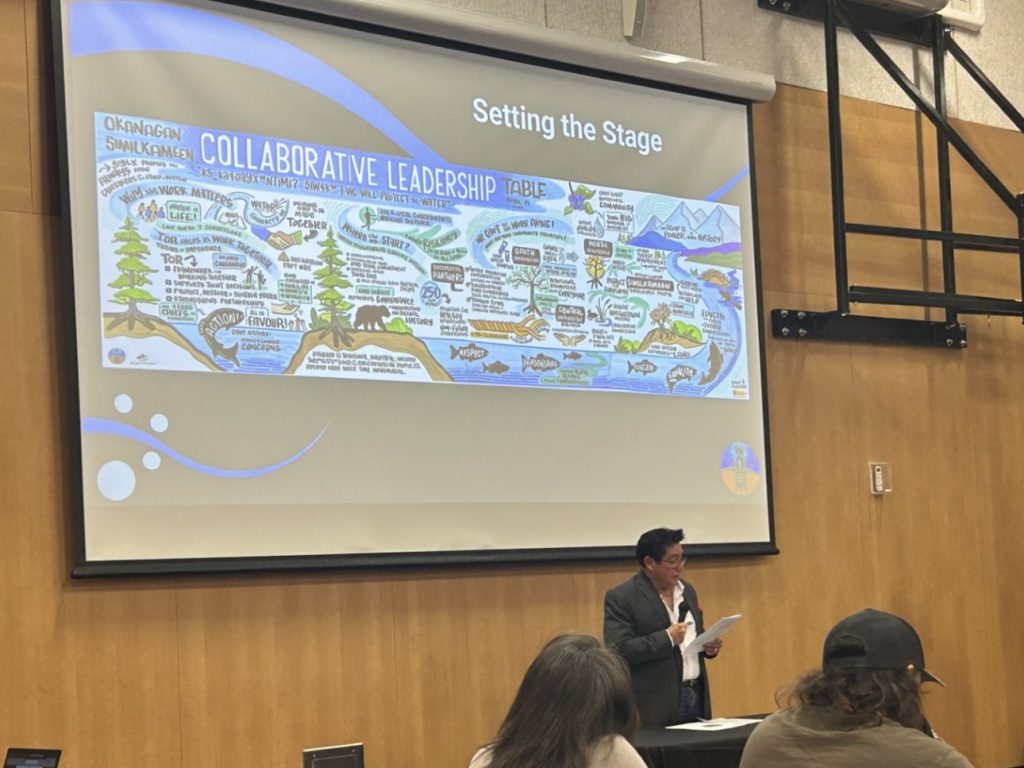
Chief Robert Louie, simo y̓il̓mixʷm (Westbank First Nation) sets the stage for the sixth meeting of the Okanagan Similkameen Collaborative Leadership Table. Photo: C. Sklar.
POLIS’ Oliver M. Brandes was invited as a lunchtime keynote speaker and also participated in his role as National Advisor to the Collaborative Leadership Initiative (CLI). The CLI is a facilitated process led by a team from the Centre for Indigenous Environmental Resources. It provides resources and expertise to support Indigenous and municipal elected leaders as they develop co-governance mechanisms, develop trust and relationships, and find solutions to shared water challenges.
The Okanagan Similkameen Collaborative Leadership Table grew out of multiple years of work and relationship-building and was originally co-convened by the Okanagan Nation Alliance and the CLI team.
“Relationships are at the heart of the CLI process,” said Emily Hoppe, Project Manager of the Collaborative Leadership Initiative. “We work with elected leaders to dispel myths, build trust and understanding, and open new pathways and methods to tackle the tough issues. Leaders in the Okanagan and Similkameen have shown that when they invest in real dialogue and commit to working together on matters of common concern, the strength of that collective leadership can prevail over challenges faced as a region.”
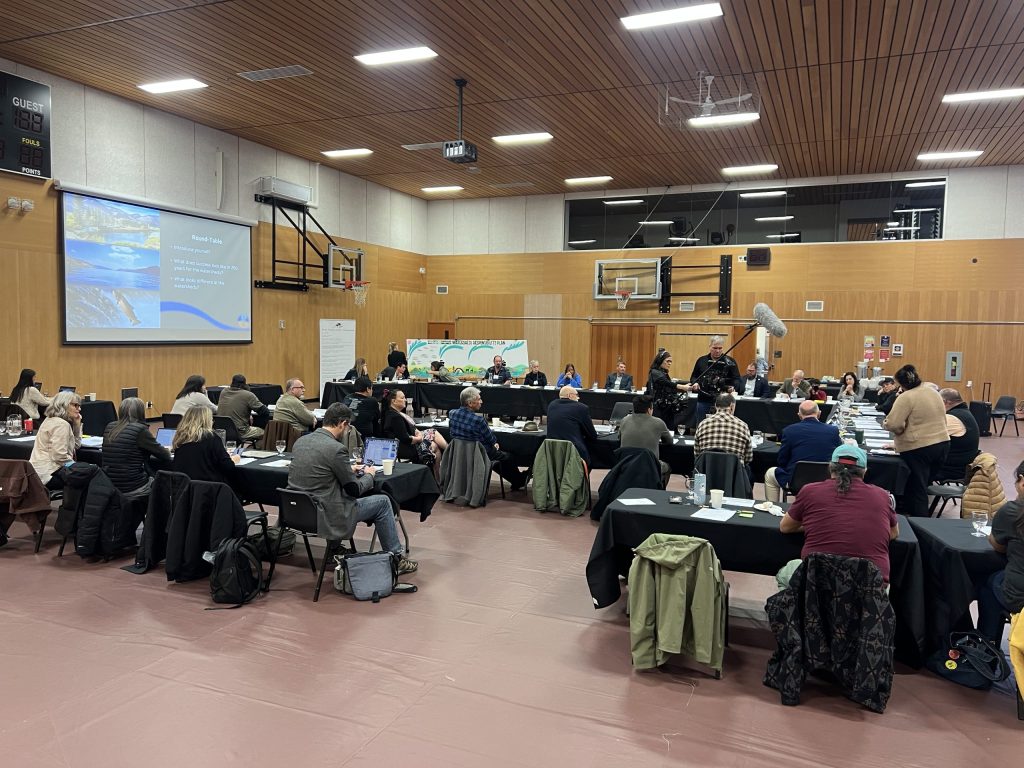
Participants gather for the sixth meeting of the Okanagan Similkameen Collaborative Leadership Table in Cawston, B.C. Photo: M-A. Phare.
As part of the CLT meeting, Oliver M. Brandes presented on “Lessons from Watershed Boards and Collaborative Governance.” His keynote drew on decades of work at POLIS and his ongoing strategic advisory role with CLI. In this broader work, Oliver also supports several organizations based in the Okanagan by sharing governance, law reform, and public policy research and strategic advice on the development of pilot projects, wildfire resilience, and watershed security, and supports communities through partnerships and institutional resources to drive better water and watershed security outcomes.
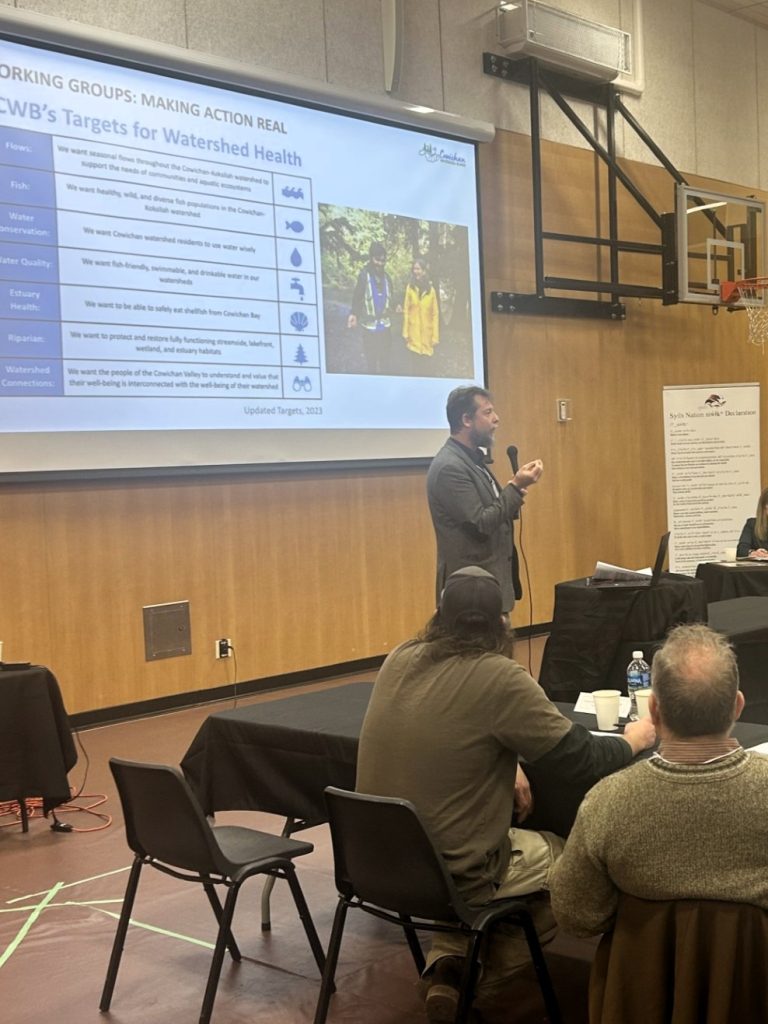
POLIS’ Oliver M. Brandes delivers keynote at meeting of the of the Okanagan Similkameen Collaborative Leadership Table. Photo: C. Sklar.
The presentation highlighted a number of successful Indigenous-Crown co-governance models from across B.C., including the Cowichan Watershed Board, the Nk’eʔxép (Drought) Management Committee in the Nicola watershed, and the Gitanyow Lax’yip Land Use Plan.
“Watershed security in a changing climate requires deep collaboration and a focus on place-based governance that is grounded in both Indigenous Knowledge and Western science,” said Oliver Brandes. “It requires new forms and forums of decision-making, as well as clear focus on local capacity and capability to drive change and make better decisions that emphasize water sustainability and watershed security.”
Offering a fulsome perspective on watershed security and how to advance resilient, community-led watershed health, Oliver made connections between wildfire resilience challenges and emerging practices from northern B.C.
This sixth meeting of the CLT demonstrated its continued commitment to working together on matters of common concern to protect and restore siwɬkʷ (water) in the Okanagan and Similkameen Watersheds, now and for future generations.


